

NFL TikTok Shows Value of Sports Diplomacy
Drawing A LINE THROUGH Deep-Seated Divides
Back in October, the NFL UK & Ireland posted a short video to TikTok, in which Jacksonville Jaguars running backs LeQuint Allen Jr. and Bhayshul Tuten were tasked with drawing a line on a map of the United Kingdom to denote, simply, where they thought the divide between North and South England is. The premise was simple: a fun piece of content designed to drum up engagement from British or UK-based American football fans in advance of the Jaguars game against the Los Angeles Rams in Wembley Stadium.
What the video inadvertently did, however, was shine the spotlight on England’s long-standing North-South divide, a phenomenon in British society and politics that marks a very real separation in the population’s political views, economic security, and even life expectancy. Allen Jr. and Tuten’s thought process on where to split the UK initially leaned on geographical assumptions — things like temperature and the urban-rural divide. But in their discussion, they noted that the South was likely “fancier” as well... an assumption that strikes at how, even for outside observers, this divide is perceived.
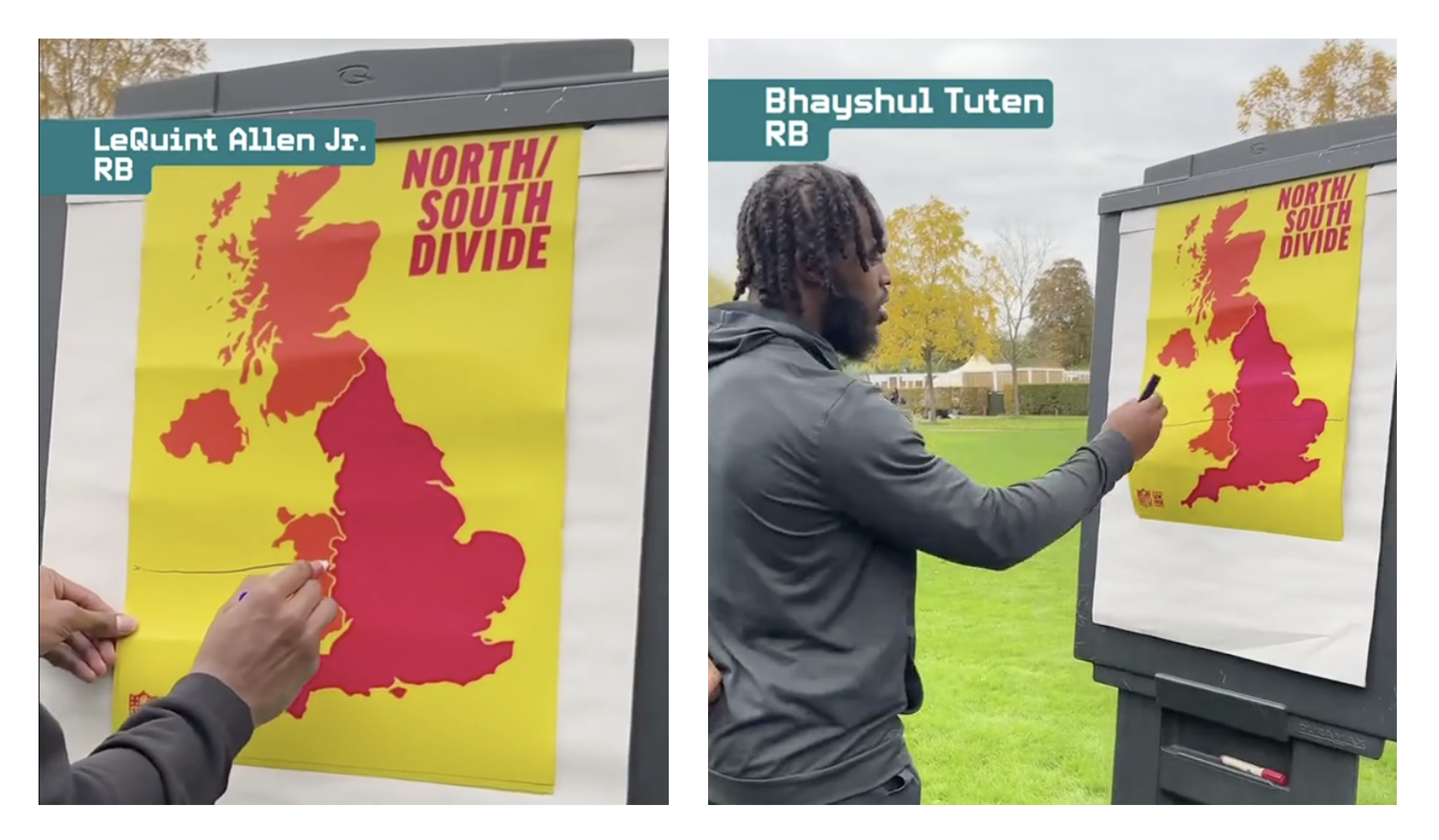
Of course, this was meant to be fun (and props to Allen Jr. and Tuten for participating). But it’s easy to see how the exercise itself could become precarious. England’s North-South divide is not something many Americans (let alone American athletes) historically know much about, let alone grasp the nuances of. A comment like “the South seems fancier” might feel harmless, but could drum up anger and isolate potential future fans.
Meanwhile, one could imagine a similar scenario taking place ahead of this week’s game between the Indianapolis Colts and Atlanta Falcons in Berlin. Splitting Germany brings quite the heavy historic weight; would fans react the same way to highlighting the consequences of decades of division between the former eastern and western halves? Would memories of the Berlin Wall or the continued economic disparities between east and west drive negative engagement? What if the athlete’s split was inaccurate?
Or what if, for the recent Pittsburgh Steelers vs. Baltimore Ravens game in Dublin, a similar map had been drawn of Ireland? What would the discourse be surrounding Northern Ireland (which, in the UK TikTok, was a disembodied island floating off the coast of Great Britain)?
Bringing it closer to home: Imagine the uproar from Americans if Manchester United stars included (or didn’t include!) Texas as a part of the American South.
As the NFL continues to push more and more into the European market, understanding these political and cultural nuances will be critical in generating long-term support and loyalty from fans. Fandom is fundamentally linked to community and identity. So, when international teams or leagues appear to be cultural outsiders — or, worse, demonstrate a lack of understanding regarding cultural or social differences — it makes it harder for fans to reward them with the same degree of support they give to their local club or team.
Investing in sports diplomacy matters in these moments. Instead of having professional athletes divide nations based on vibes, we could alternatively give them a healthy understanding of historic, cultural splits in the country at hand — and how an accurate (or inaccurate) drawing might be interpreted by locals they’re hoping will soon become their fans. A firm, dedicated grasp on this can help players, teams, and leagues leverage even fun little bits like TikToks to build bridges, rather than simply drawing dividing lines.
